Pool Leak Detection in Edison, NJ
Is Your Pool Losing Water?
Unexplained pool water loss during the hot New Jersey summer is frustrating. While a certain amount of evaporation is entirely normal, continuously adding water to maintain the skimmer level indicates a problem. Pool leak detection Edison NJ services are specifically designed to find out exactly where that water is going.
Many homeowners attempt the standard bucket test, which is a great way to confirm that you are losing more water than natural evaporation allows. However, a bucket test has limitations—it cannot tell you if the leak is structural (in the liner or concrete) or hidden deep within your underground pool plumbing.
We do not imply that every pool leak is a plumbing leak, but when structural elements check out, the piping is the usual suspect. We perform precise dye testing around light niche leaks, skimmer issues, and structural joints. For the plumbing itself, we conduct pressure testing on the return lines and suction lines. Especially after a harsh New Jersey winter, spring opening often reveals post-winterizing leaks where ice expansion may have cracked underground PVC lines.
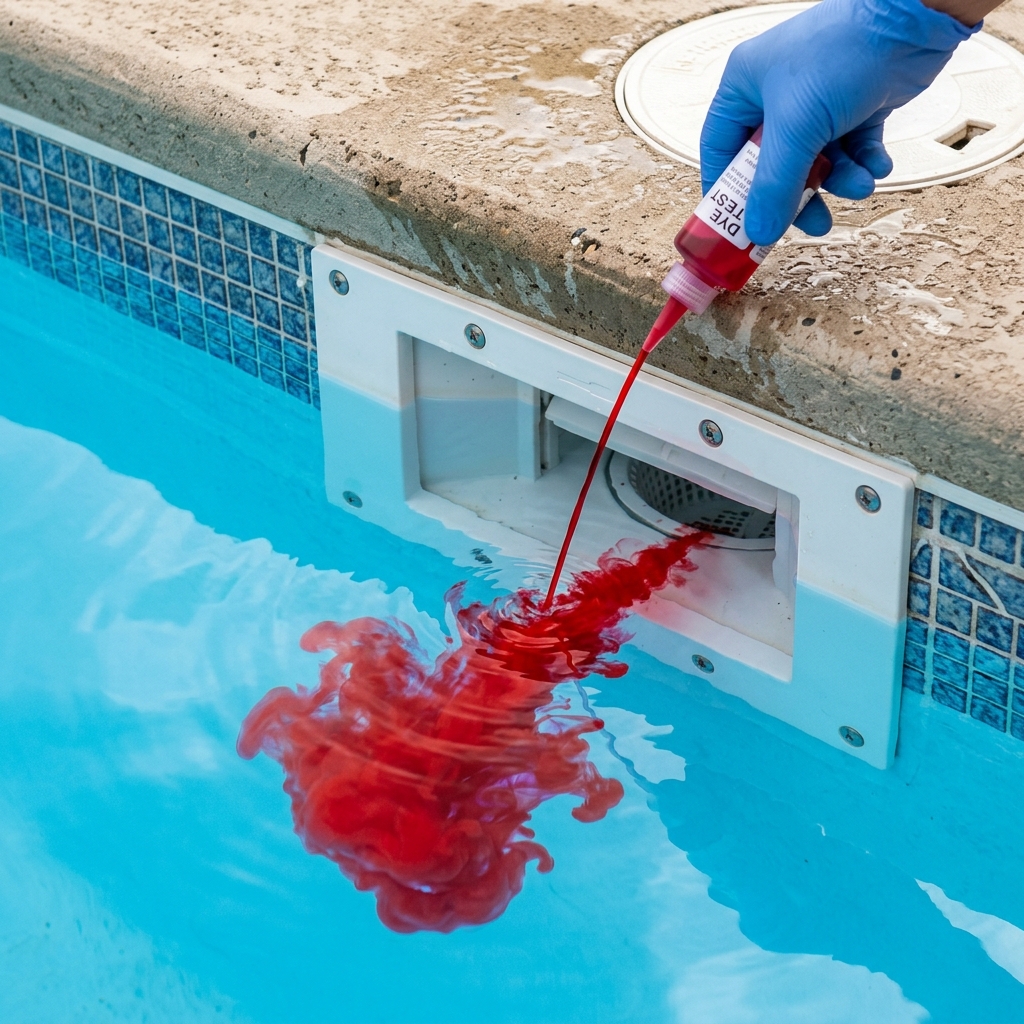
By finding the exact failure point, you avoid tearing up your entire patio or deck trying to trace a line. If your pool leak is accompanied by mysterious water issues elsewhere in your yard, you may also require water line leak detection, or if water seems to be migrating toward the home's foundation, hidden leak detection.
Stop Wasting Water and Chemicals
Find the leak before the season is over. Talk with a local leak specialist.
Call (201) 510-1615Frequently Asked Questions
How much water evaporation is normal for a pool in NJ?
During a hot, dry, and windy summer, it is common to lose about a quarter-inch of water per day to evaporation. If you are losing significantly more than that, or notice sudden drops in water level overnight, you likely have a leak.
What is the bucket test?
The bucket test involves placing a bucket of water on the pool steps, matching the water level inside the bucket to the pool water level outside it. After 24 hours, if the pool level has dropped significantly more than the bucket level, a leak is confirmed.
Do you dive into the pool to find the leak?
Depending on the symptoms, we use a combination of pressure testing the plumbing lines from the pump equipment and utilizing specialized dyes around fittings like skimmers, returns, and lights to visually confirm suction pulling water out of the pool structure.